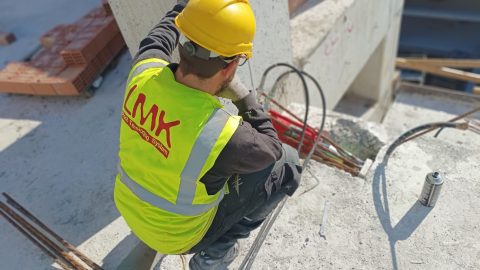

HiSCS has been awarded the stressing, testing & grouting works of soil anchors in the project named “PROJECT VORIA”.
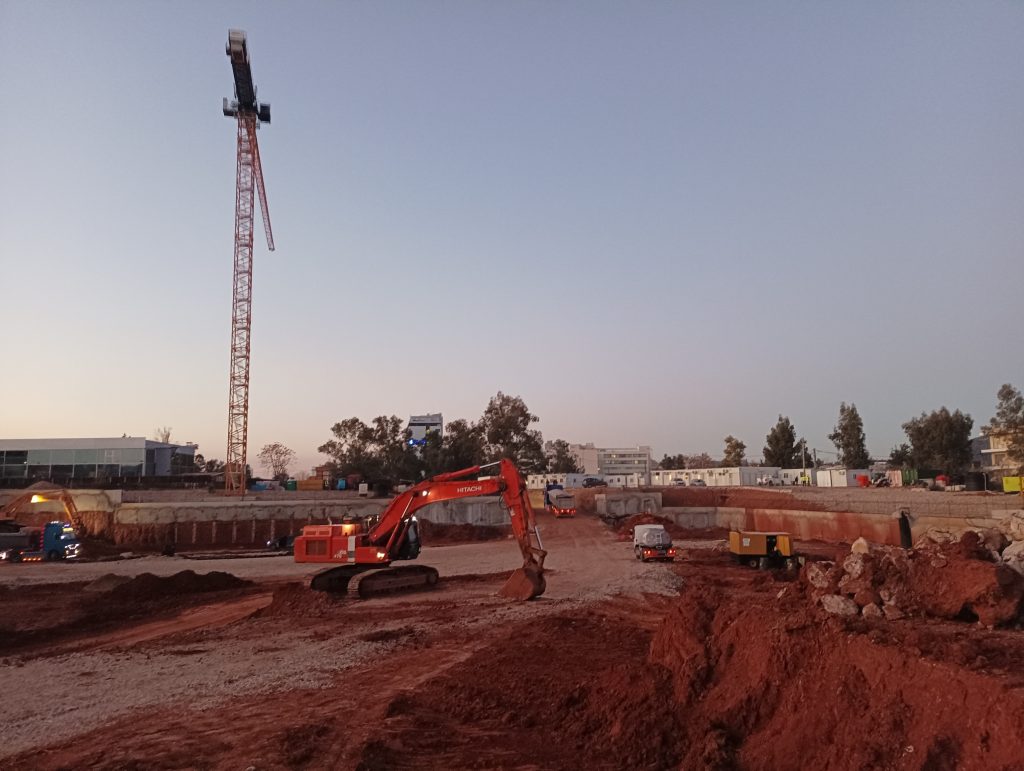
It concerns the construction of a complex building for a multi-dynamic mixed-use. These 52 acres complex will include a state-of-the-art casino, a 150-room 5-star hotel, a 1400-seat conference amphitheatre, many dining and entertainment facilities and 836-space parking lot.
HiSCS has undertaken part of the preliminary geotechnical works related with the installation, stressing and grouting of soil anchors.
Soil and rock anchors are geotechnical elements, typically formed by strand tendons grouted into drilled holes. These anchors are used to transfer tensile loads to solid ground, thus preventing movements in slopes, retaining walls and foundations by providing resistance against uplift forces, lateral pressures, or landslides. They are essential for stabilizing excavations without internal bracing. They consist of a bonded section (grouted and bonded to soil), a free stressing length, and the basic stressing elements which are the anchor head with barrels and wedges, where tension is applied to the strands using jacks after grout curing to lock them in place.
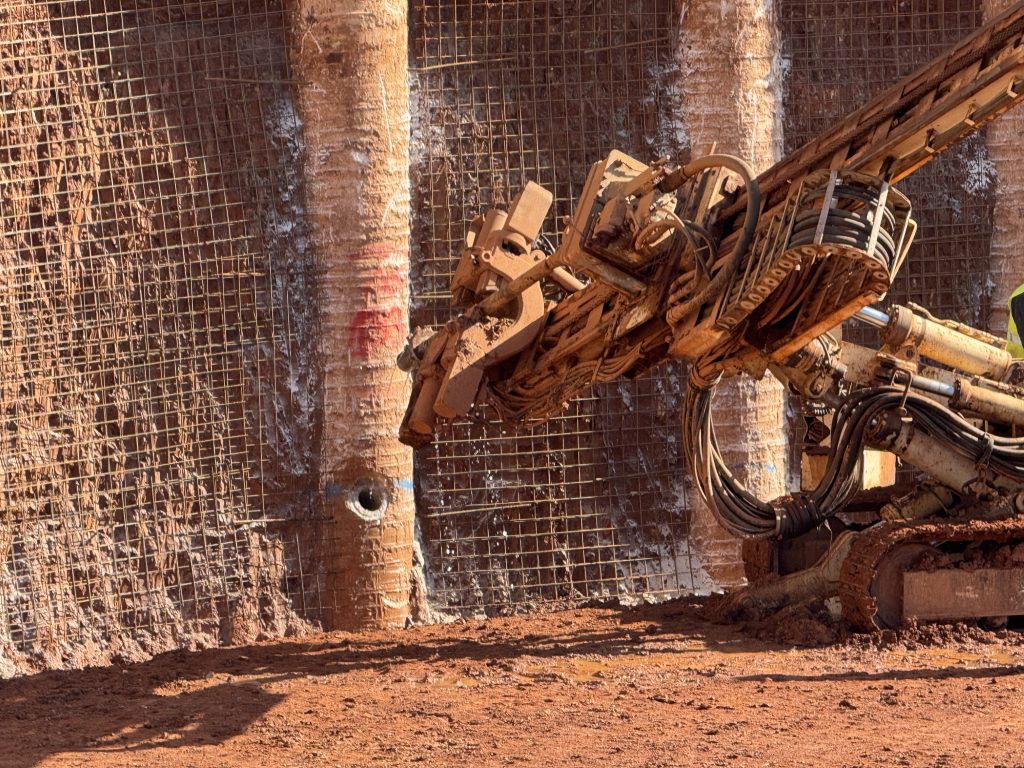
The design specifies more than 700 temporary anchors with 3 and 4 seven-wire strands, having nominal diameter of 15.2mm. The anchors are distributed every 2-2.4m, at three different elevations along 247 concrete piles of 0.8m diameter. The piles are drilled using a crawler-mounted rig at a total depth of about 25m.
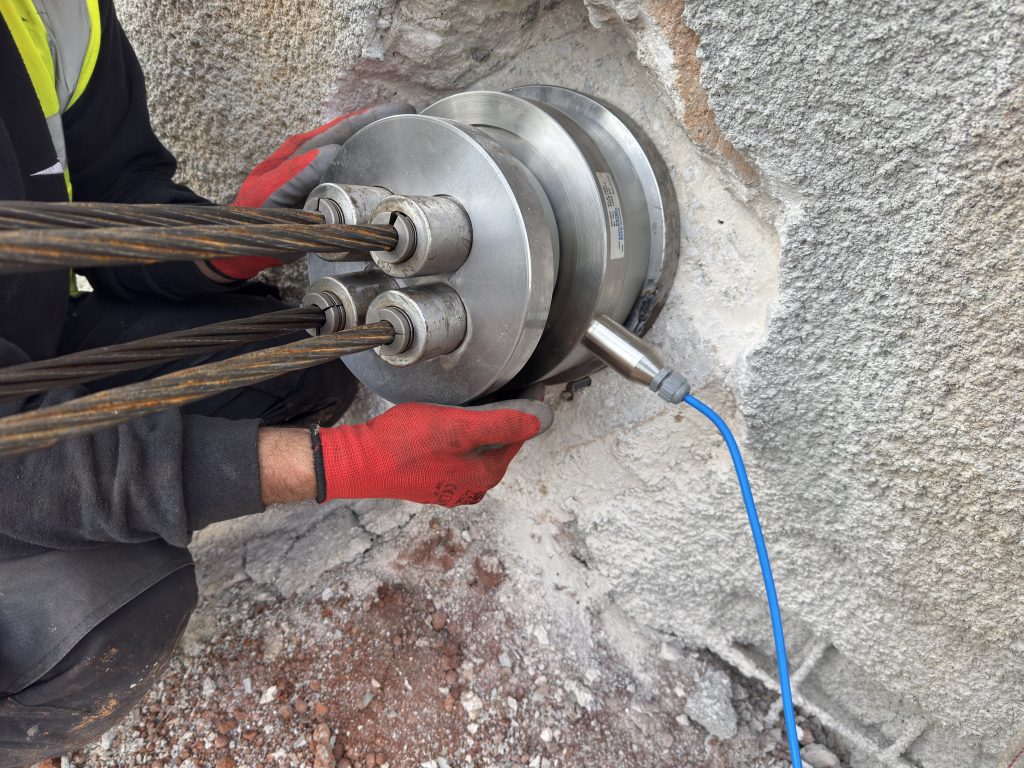
The soil anchors are inserted manually through the hole having 12m bonded section. The bonded section of the anchor consists of bare strands connected at intervals of about 1m using plastic spacers in the intermediates, so as to develop the needed bonding with the grout. The free part of the anchor (strands covered with a plastic tube which ensures the separation of the strands from the grout), allows the anchor’s elongation, thus application of tensile forces during the stressing process. The installation is completed with the placement against the pile of the anchor plate with barrels and wedges.
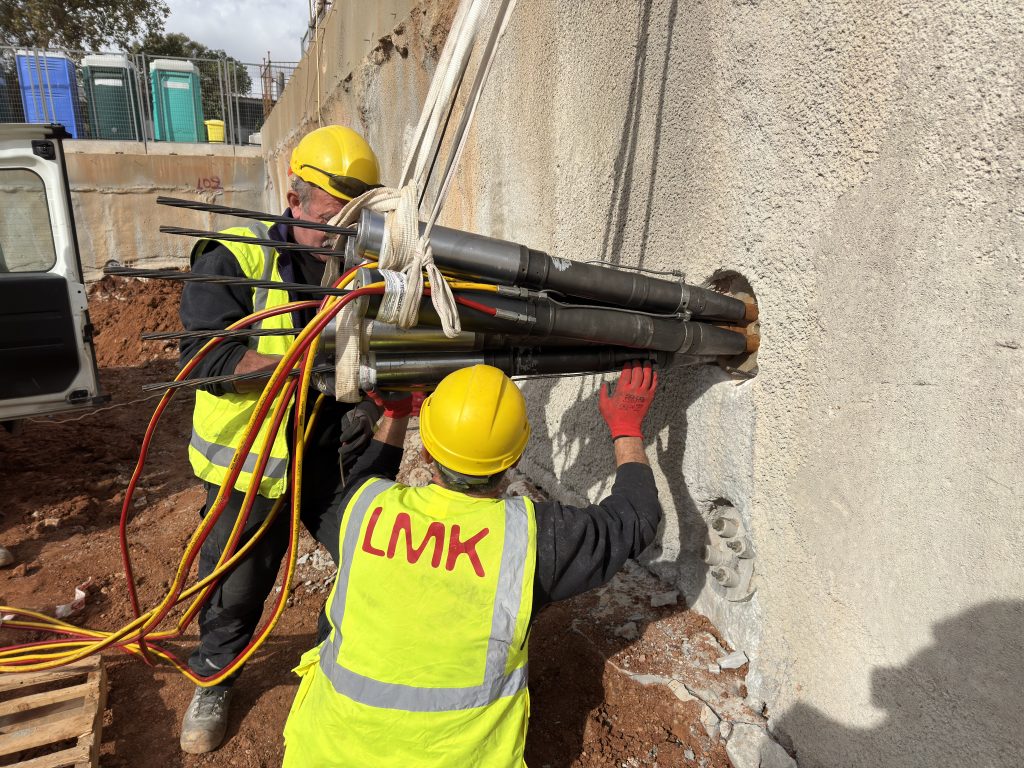
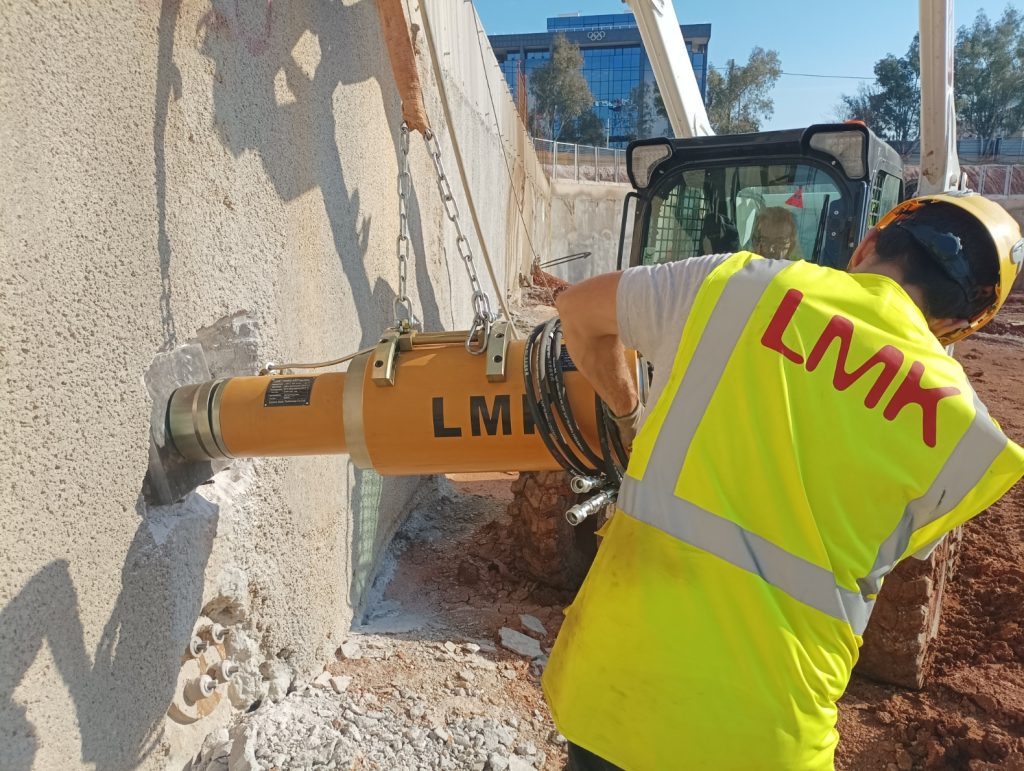
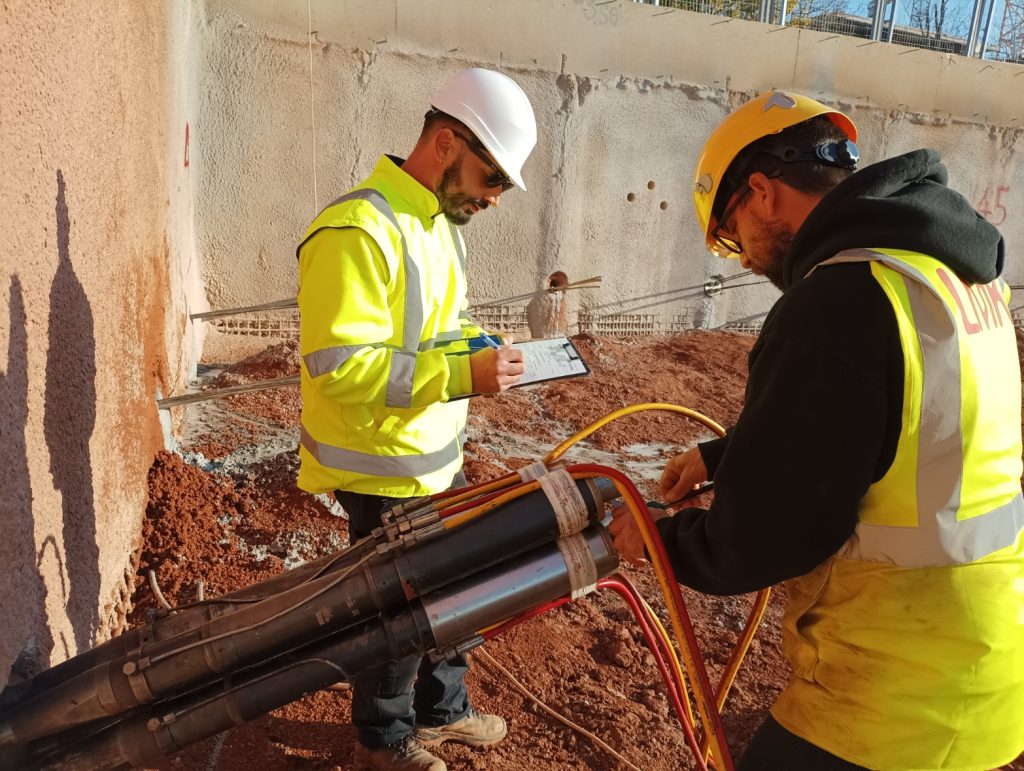
HiSCS has been appointed to execute the stressing and grouting works including the needed suitability, acceptance, and pullout tests as well as the placement of load cells in specific locations to monitor the behaviour of the anchors (stressing forces over time). Mono-strand hydraulic jacks connected in parallel with a hydraulic pump have been used to develop the required by the design stressing force (330-380KN/anchor).